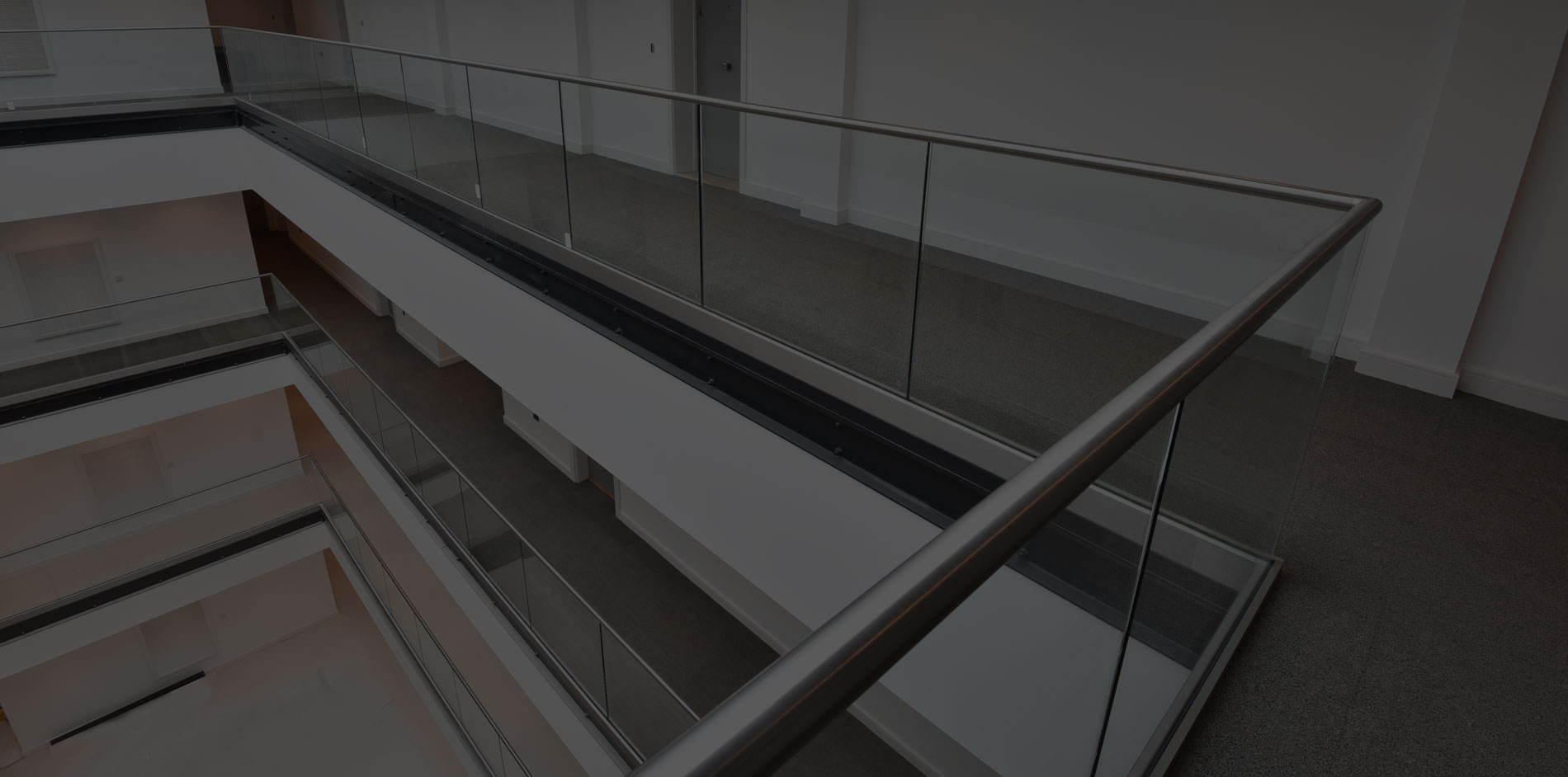
Considerations for designing glass balustrade systems
Several factors need to be considered when planning your perfect glass balustrade installation.
Firstly, safety, is the balustrading in a potentially crowded area? Is there a risk of fall? For example, a stadium application.
Glass balustrading can provide a safe and secure barrier for a range of applications, the type of glass and height of the glass balustrade need to be considered along with relevant British Standards, i.e. BS 6180:2011
Secondly, aesthetics, what look are you trying to create? Do you prefer the more substantial, regimented look of a glass post balustrade system and the extra sense of security and balance? Or perhaps you are looking to achieve the ‘all glass’ look with the bare minimum of interruption to the views beyond the balustrading? The great thing about all solutions is the light, fresh feeling they provide by unrestricting sunlight into any given interior or exterior.
Consideration needs to be given to the type of handrail required; does it need to be fixed to the side of the glass? If so, the glass will need drilling. Handrails or ‘cap rails’ can be fixed to the top of the glass; this use of handrail also provides an important safety benefit by protecting the top of the exposed glass.
Consult British Standards and local building regulations for specific details on the use of handrails.
Why glass balustrades remain the preferred choice for specifiers
In recent years, rising glass costs have led to a trend of substituting glass balustrades with metal railings at the tender stage, especially on high-rise and residential tower projects. While this may offer short-term savings, it often compromises the architectural intent and the long-term value of the development.
Glass balustrades remain the preferred choice for developers and residents due to their modern appearance, ability to maximise natural light, and unobstructed views. They also help achieve a higher-quality finish and increased market appeal, which can translate into stronger sales or rental values.
In addition, glass balustrades can be specified to meet all relevant UK Building Regulations and fire safety requirements, including A2-s1,d0 fire-rated systems for high-rise applications.
The Building Safety Act 2022 further strengthens these obligations, requiring robust safety performance, full documentation, and a whole-building approach to fire and structural safety, particularly for higher-risk and high-rise residential buildings. They provide robust safety performance, are durable, and can be engineered to suit a wide range of structural and aesthetic requirements.
While initial material costs may be higher, the benefits of glass balustrades – enhanced aesthetics, compliance, and long-term value – often outweigh the short-term savings of switching to metal railings.
Here at Glasstec Systems, we recommend retaining glass balustrades as a core design element, rather than value engineering them out, to preserve the quality and intent of the project.
Golden Square glass balustrade and juliet balcony project
Project: 25 Golden Square, London
Scope: Design, supply, and installation of A2 fire-compliant glass balustrades and Juliet balconies
Application: Residential property, 5th and 6th-floor balconies
Key details
- Compliance: All glazing specified to BS EN 13501 A2-s1,d0 fire rating.
- Performance: Balustrades designed to achieve 0.74 kN/m line loads.
- System: Structural aluminium U-Channels with gaskets provide support and durability.
- Handrails: Continuous welded square handrails, colour-matched to the building exterior.
- Integration: Weatherproofing and integration with Dorma roof carefully detailed.
- Access: Small maintenance gate incorporated as part of the design.
Project challenges
- Restricted Access: Limited space on-site required careful planning and installation sequencing.
- Solution: Strategic installation approach enabled safe and efficient handling of glass panels within the confined working area.
Outcome
- Delivered a compliant, robust, and visually appealing balustrade solution.
- Enhanced resident safety while maintaining clear views and architectural intent.
- Demonstrated effective integration of fire safety, structural performance, and aesthetics in a high-density urban setting.
Click here to read the full case study
Why work with Glasstec Systems for your glass balustrade project?
We work closely with architects and contractors where we help design sophisticated balustrades using expert CAD systems and designs; calculate, apply and test load bearings on the glass structure to ensure they are fit for the purpose intended.
We give importance to ensuring the quality of our fire-rated glass balustrades. This is an important feature during the manufacturing stage of the glass. We assess how the glass reacts under impact and then approve it for commercial use.
The team at Glasstec Systems can work with your project requirements and design, supply and install beautiful glass balustrades.
Click here to contact us. Alternatively telephone us on 020 8500 2818 or email us info@glasstecsystems.com