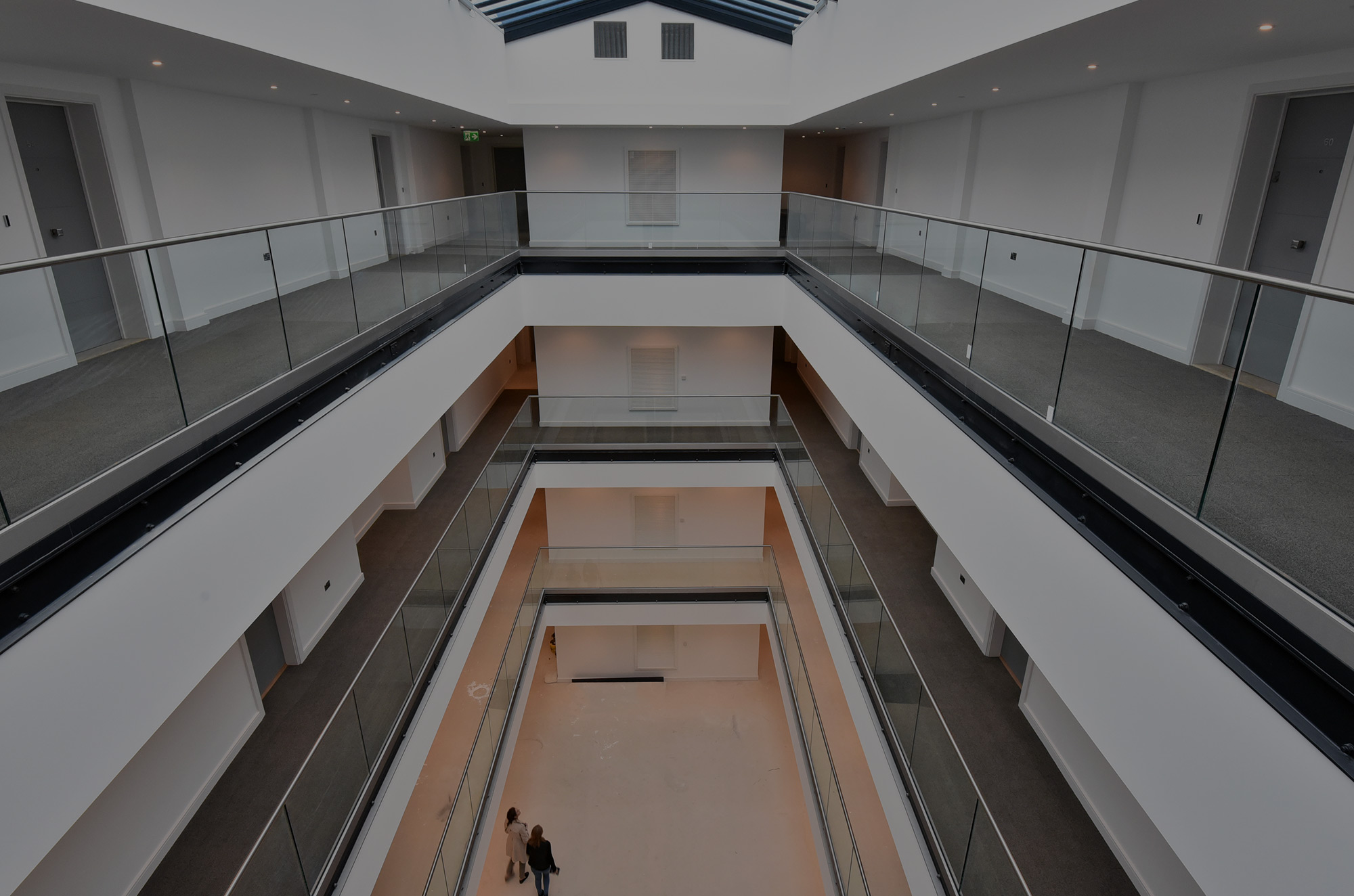
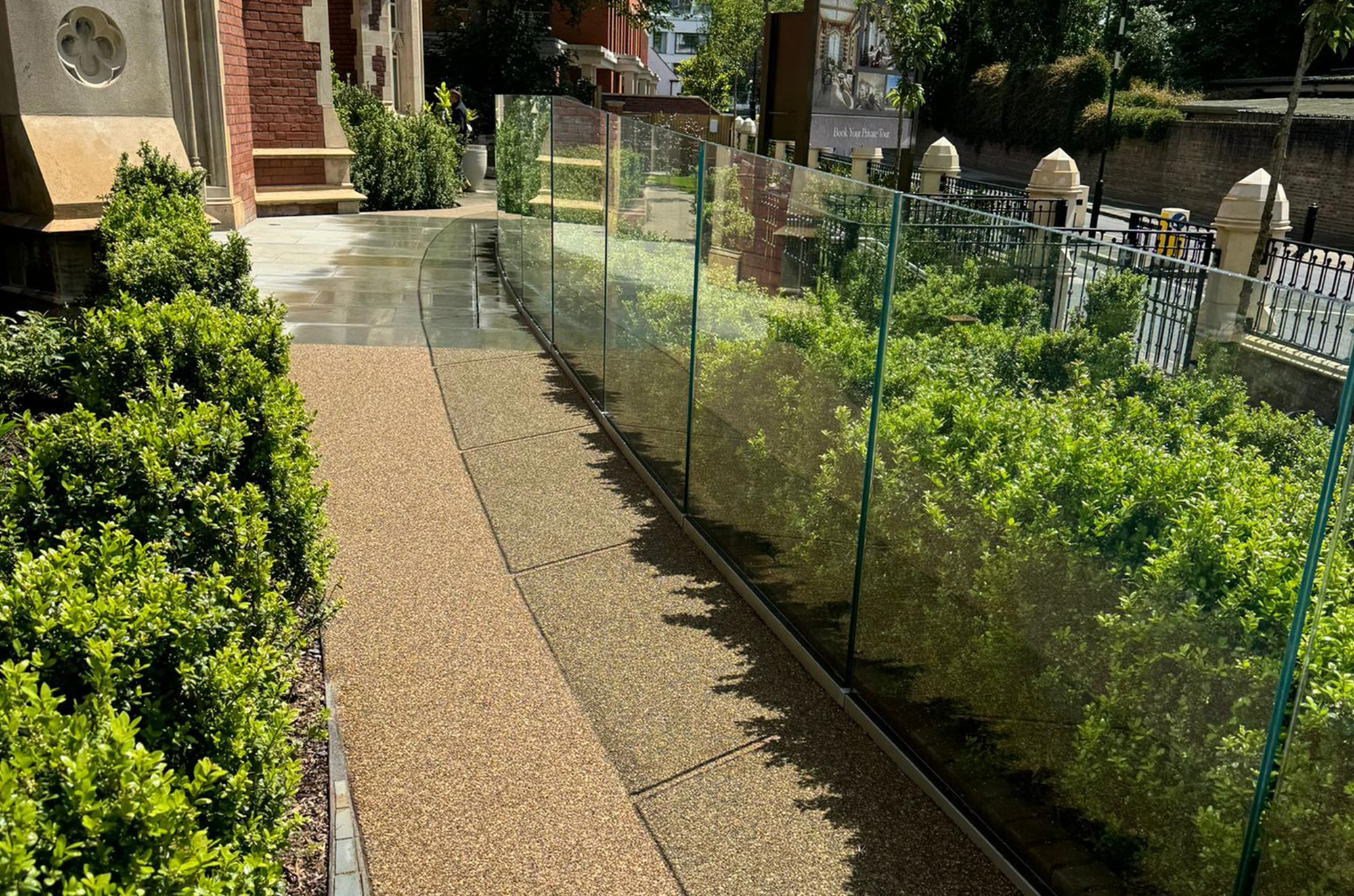
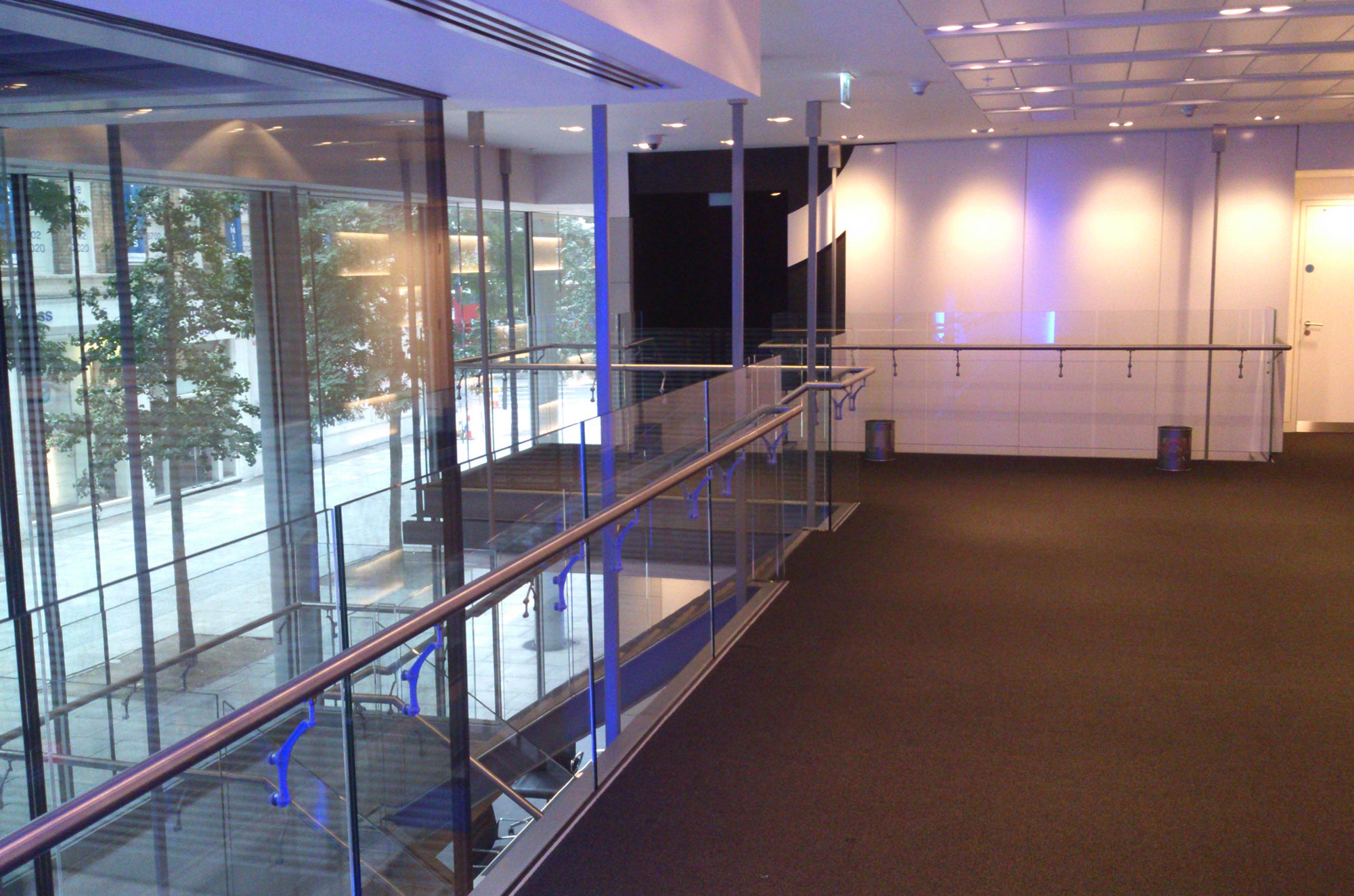
Why frameless glass balustrades?
Frameless glass balustrade systems bring clear advantages to every stage of a project.
For architects, they provide a design-led solution that combines transparency, minimal detailing, and compliance with UK Building Regulations (when designed and installed according to best practice).
Contractors and installers benefit from proven fixing systems, including base channels, side-mounted profiles, and spigot or point-fix systems. Each option is engineered for reliability, supported with full technical documentation, and designed to make installation straightforward when properly detailed.
For end users, the result is a safe, durable, and low-maintenance system that maximises light, maintains views, and enhances the overall value of the property.
Technical considerations for specification
Glass type and thickness
Frameless balustrades use toughened or laminated toughened glass to deliver both structural and safety performance. Thickness will vary depending on use:
- Residential balconies and stairs: typically 15-17.5 mm laminated toughened glass.
- Commercial and public spaces: often 21.5 mm laminated glass or greater, depending on load requirements.
The choice between toughened and laminated glass is critical. Laminated options provide residual safety because the interlayer holds the glass in place if fractured; which can allow designs without handrails if compliant.
Fixing methods
Frameless systems are secured by:
- Base channels (U-channels or base shoes) – recessed or surface-mounted.
- Side fixings – allowing cantilevered edges and maximising floor space.
- Spigots or point fixings – suited to lighter applications or where design intent requires discrete support.
Each fixing method outlined above must be designed and engineered to safely resist the horizontal line loads set out in BS 6180, while also controlling deflection so that the glass panels remain stable under use.
In addition, the detailing must account for thermal movement, as glass and metal components expand and contract at different rates. Without proper allowances for this movement, stresses can build up within the system, increasing the risk of glass breakage or failure at the fixing points.
Loadings and compliance
Frameless balustrades must comply with BS 6180:2011 and Approved Document K. Required line loads vary by application:
- 0.36 kN/m – internal domestic settings
- 0.74 kN/m – external domestic and office use
- 1.5 kN/m – public spaces such as retail, terraces, or crowded areas under 3 m wide
- 3.0 kN/m – stadiums, shopping centres, and areas prone to overcrowding
Balustrades also require minimum heights:
- 900 mm – internal stairs and landings.
- 1100 mm – external balconies and terraces.
In addition to meeting line load requirements, frameless glass balustrades should be checked for deflection, with industry guidance typically limiting movement to the lesser of span/65 (L/65) or 25 mm, ensuring the barrier remains both safe and visually stable in service.
Safety and fire performance
For high-rise applications, fire performance and safety are critical considerations. The primary role of a fire rated glass barrier is to reduce combustibility and limit smoke and droplet emissions. Not to act as a fire barrier.
An A2-s1,d0 balustrade will not add fuel, smoke or flaming droplets to a fire, but it is not designed to stop flames or heat transfer in the way an E (integrity) or EI (integrity + insulation) glazed walls, doors and partitions do.
So compliant glass balustrades will not contribute towards the spreading fire.
Advantages for Architects
Frameless glass balustrades offer architects the opportunity to achieve a clean, modern aesthetic while still meeting demanding technical requirements.
The systems can be engineered with different fixing methods, such as recessed base channels, surface-mounted profiles, or side-mounted options. This gives flexibility to suit the structure and detailing of the project.
Bespoke glass specification can be supplied for each project, from 15 mm laminated toughened panels for residential balconies through to 21.5 mm or thicker laminated systems for high-load commercial areas.
A key advantage is the ability to design with or without a handrail. Where laminated toughened glass with a suitable interlayer is specified, the balustrade can maintain structural integrity even if the glass fractures, removing the need for a continuous rail and allowing a completely frameless appearance.
Handrails can still be integrated where required, offering added protection and edge durability.
Importantly, frameless glass balustrades can be detailed to comply with BS 6180 loadings and Approved Document K height requirements while also achieving A2-s1,d0 fire performance in line with Approved Document B for higher-risk residential buildings.