Understanding the regulations
The primary standard governing balustrades in the UK is BS 6180:2011 Barriers in and about buildings. This standard sets out the performance criteria for line loads, point loads and uniformly distributed loads, depending on building type and occupancy.
It also states when a handrail is required and when it can be omitted.
In many applications, a handrail is not mandatory, provided the glass is laminated and strong enough to satisfy structural loading requirements. However, this must be demonstrated through structural calculation or testing data.
Approved Document K requires guarding wherever a drop of more than 600mm exists. Glass balustrades may serve as the guarding element, but they must meet impact and loading criteria.
Approved Document M, covering access and inclusion, must also be considered. Even if a handrail is not required for structural performance, it may still be necessary to support inclusive design or satisfy Building Control in high-use public environments.
Understanding the relationship between these regulations is essential when determining whether a handrail-free system is acceptable.
Structural requirements for frameless glass balustrades
Frameless balustrades must withstand the full loading requirements set out in BS 6180:2011 without relying on a handrail for structural support. The standard sets minimum horizontal uniformly distributed line loads based on the use and occupancy of the area:
- 36kN/m – Single-occupancy domestic areas or light pedestrian routes in industrial or storage buildings.
- 74kN/m – Offices, communal residential areas, corridors, stairs, landings and external balconies, including Juliette balconies and roof edges.
- 5kN/m – Retail environments, pedestrian routes in car parks, and areas susceptible to overcrowding such as footways or pavements less than 3m wide adjacent to sunken areas.
- 0kN/m – High-occupancy public spaces such as theatres, shopping malls, assembly areas and footways more than 3m wide adjacent to sunken areas.
- Vehicular areas – Pedestrian zones within car parks must meet a 1.5kN/m load, while any loads imposed by vehicles are assessed separately and fall outside the scope of pedestrian barrier requirements.
To achieve these values without a handrail, the system must be designed using laminated toughened glass with a structural interlayer that provides sufficient stiffness and post-breakage integrity.
SGP (SentryGlas®) interlayers are often preferred over standard PVB because they offer higher rigidity and reduced deflection. In frameless applications, SGP allows thinner panels to achieve the same performance as thicker PVB laminated applications.
Base channels and structural fixings must be engineered to support the panel fully along the base edge. This requires careful detailing, accurate tolerances and consideration of lateral deflection limits.
All frameless systems should be supported by engineering calculations or test evidence to demonstrate compliance for Building Control approval.
Benefits of frameless glass balustrades
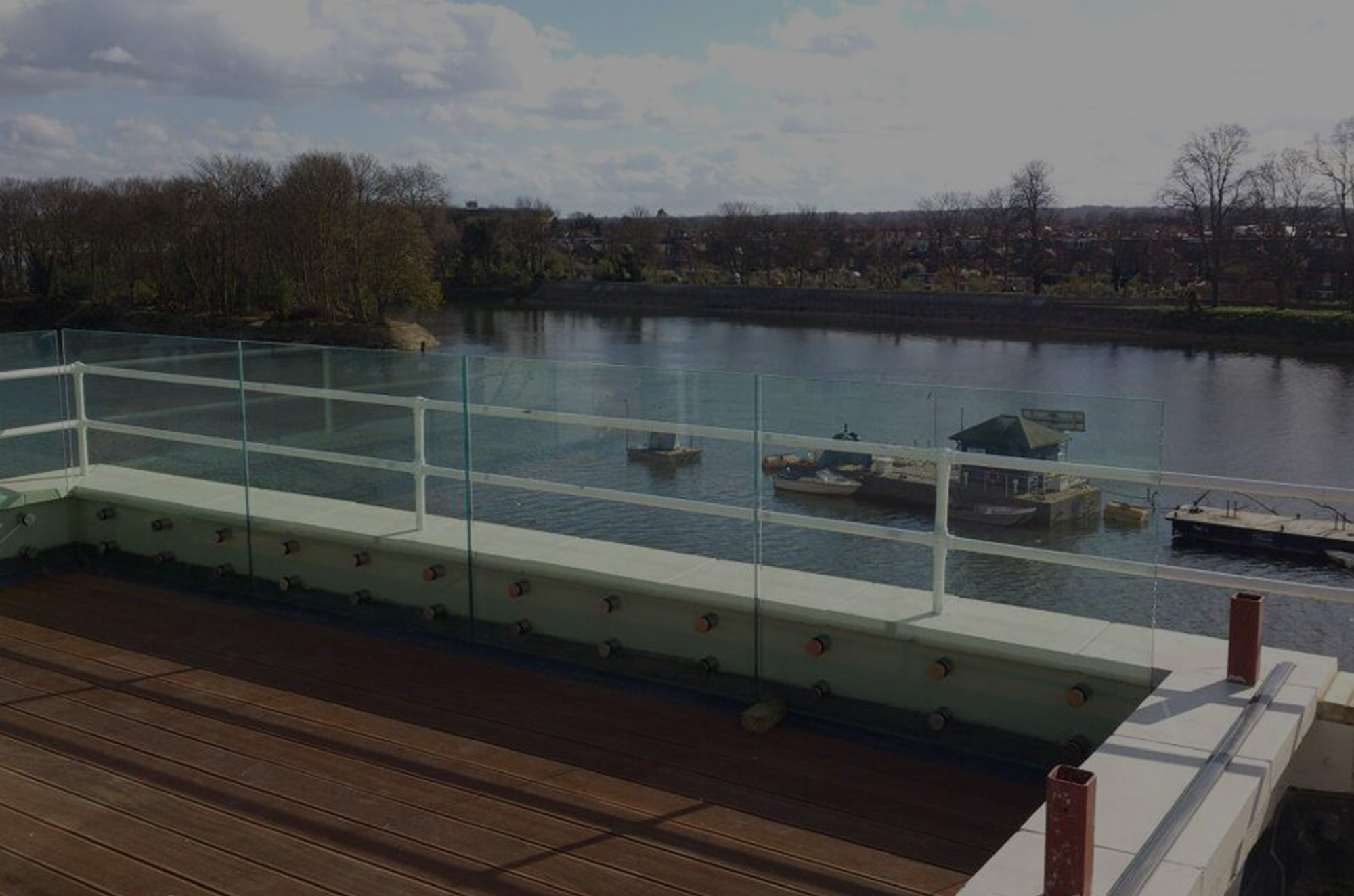
Handrail-free balustrades offer several advantages for architectural design:
- Clean, uninterrupted lines and maximum transparency
- High levels of natural light transmission
- A modern aesthetic suited to commercial and residential environments
- Reduced visual clutter compared to post-and-rail systems
- Long-term durability when properly specified
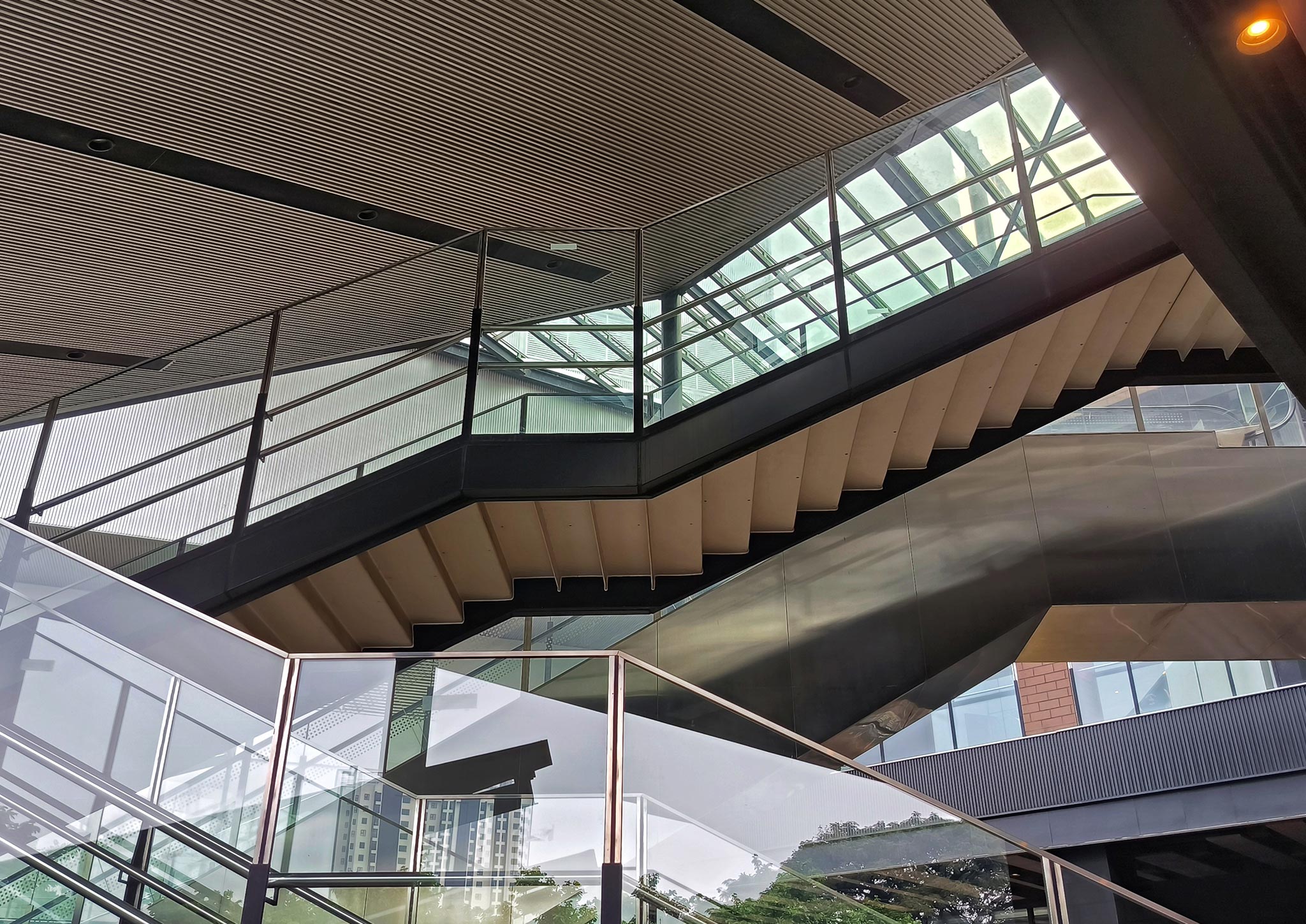
- Seamless integration with other glazing systems such as atrium glazing, staircases or canopies
How Glasstec Systems supports architects
At Glasstec Systems, we assist architects from the concept stage onward, providing technical guidance on glass specification, loading requirements, interlayer selection and compliance with BS 6180:2011.
We supply tested and proven frameless balustrade systems that meet required performance standards without the need for a handrail.
Our experience across commercial and residential projects allows us to advise on minimalist design options while ensuring that Building Control requirements are met.
By offering a full range of structural glazing solutions, including balustrades, fire-rated systems, canopies, partitions and screens, we provide consistent detailing and performance across the project.
Working with Glasstec Systems
Glass balustrades can be installed without a handrail when designed and specified correctly. Compliance depends on meeting the performance requirements of BS 6180:2011, selecting suitable glass and interlayers, and ensuring the fixing system provides adequate restraint.
Glasstec Systems works closely with architects to achieve minimal, highly transparent balustrade designs that satisfy both aesthetic goals and regulatory standards.
For design advice, structural guidance or specification support, contact the team at Glasstec Systems on telephone: 020 8500 2818 or email info@glasstecsystems.co.uk